Be the best you yet
4 Tips for Managing Your Mood During Perimenopause
At bigdeelhealth, we focus on real advice and products for perimenopausal and plus size women in their 40s, helping you feel confident and supported every day.
5/8/20242 min read
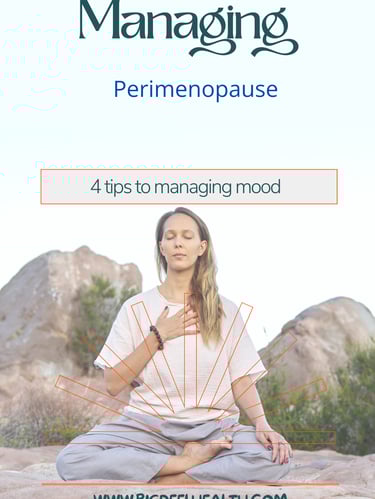
4 Tips for Managing Your Mood During Perimenopause: Sleep, Energy, Concentration & Sexual Drive
Perimenopause is a natural transition, but it often arrives with changes that can feel anything but natural—especially when it comes to mood, sleep, focus, energy, and sexual desire. The hormonal shifts that begin in your 40s (and sometimes earlier) can create a ripple effect throughout your daily life.
The good news? You’re not powerless. With the right habits and awareness, you can support your mood and emotional well-being while navigating this new phase with confidence and clarity.
Here are four practical, empowering tips to help you manage mood changes during perimenopause:
1. Prioritize Sleep as a Non-Negotiable
Sleep disruptions are one of the most common challenges in perimenopause. Night sweats, anxiety, and shifting hormones can make restful nights harder to come by—but quality sleep plays a huge role in stabilizing your mood.
Try this:
Create a calming nighttime routine
Reduce screen time an hour before bed
Keep your room cool
Explore gentle relaxation techniques like deep breathing or light stretching
Use sleep supporting supplements
There are many times of sleep supporting supplements. Sleep supplements can offer gentle, natural support for deeper, more restorative rest. The right formulas may help calm the mind, reduce nighttime restlessness, support relaxation, and make it easier to fall asleep and stay asleep. Better sleep can boost mood, energy, concentration, and overall well-being—especially during times of hormonal change.
MoonBrew contains an all-star roster of magnesium, superfoods & adaptogens designed to help you feel calm before bed, improve rest, and wake up feeling refreshed. Click here to purchase. https://amzn.to/4pPU6AU
Rest is not a luxury—it’s a foundation for emotional balance.
2. Support Your Energy Levels with Movement and Nutrition
Fatigue can sneak up fast during perimenopause, making even simple tasks feel overwhelming. Staying active—even with short, low-impact workouts—can help boost your mood, energy, and metabolic health.
Fuel your body with:
Lean proteins
Whole grains
Fruits and vegetables
Hydrating fluids
Some women also find that protein powders or energy-support supplements help fill nutritional gaps, but be sure to choose quality products and consult your doctor before adding anything new.
3. Strengthen Your Focus & Concentration
Many women describe perimenopause brain fog as “walking into a room and forgetting why.” Hormonal fluctuations can temporarily affect cognitive sharpness, but there are ways to stay mentally grounded.
Try incorporating:
Light daily exercise (great for brain health!)
A consistent sleep schedule
Mindfulness or meditation
Organizational tools like notes or digital reminders
Your brain is adapting—give it grace and support.
4. Care for Your Sexual Wellness
Changes in sexual desire are extremely common during perimenopause, yet rarely talked about. Lower estrogen, fatigue, and mood changes can all play a role.
Supporting your sexual well-being may include:
Open communication with your partner
Prioritizing intimacy in new, pressure-free ways
Using lubricants or moisturizers designed for comfort
Adjusting your lifestyle to reduce stress
If low libido persists or causes concern, a healthcare provider can offer individualized guidance and options.
You’re Not Alone—And You’re Not “Losing Yourself”
Perimenopause may change your body and mind, but it doesn’t define you. These shifts are part of a larger, beautiful transition into a new stage of life. With awareness, support, and actionable habits, you can regain control of your mood and daily well-being.
And remember: Always talk to your doctor before starting any new fitness routine, supplement, or wellness practice. Your health journey is unique, and your care should be too.